Home / Mowers / Navimow i-Series
Segway Navimow i-Series: The Line Most Buyers Actually Purchase
The X4 flagship gets the headlines, but the i-series is Segway's volume line — it starts at $799, undercutting most wire-free rivals by hundreds. One correction before anything else, because roundups keep getting it wrong: the i105 and i110 are not antenna-free. They use a local RTK (Real-Time Kinematic — satellite positioning corrected to about an inch) antenna that ships in the box and needs a clear view of the sky. Antenna-free Network RTK starts one rung up, with the i2 AWD.
Full disclosure: we haven't lived with this one — this page is built from manufacturer specs, dealer information, and reports from owners who have. The mower we own and run on our own yard is the Mammotion Luba 3 AWD 1500.
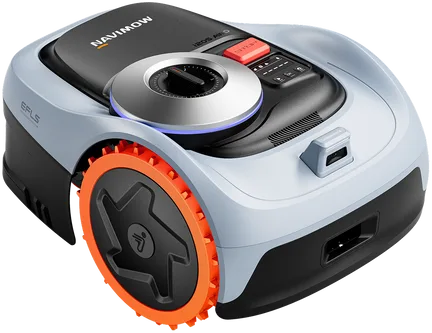
The lineup (US, October 2026)
| Model | List price | Max area | Positioning | Drive |
|---|---|---|---|---|
| i105 | $799 (seen at $669 on sale) | ⅛ acre | Local RTK + vision (EFLS 2.0) — antenna in the box | Front-wheel drive |
| i110 | $1,099 (was $1,299) | ¼ acre | Local RTK + vision (EFLS 2.0) — antenna in the box | Front-wheel drive |
| i206 AWD | $999 (seen at $849 on sale) | 0.15 acre | Network RTK — no antenna needed where coverage exists | Xero-Turn AWD |
| i210 AWD | $1,299 | 0.25 acre | Network RTK | Xero-Turn AWD |
| i215 LiDAR | $1,599 (seen at $1,329 on sale) | 0.37 acre | Solid-state LiDAR + vision — no RTK at all | Rear-wheel drive |
List prices from navimow.com, checked October 2026; the i110 showed out of stock on Segway's store at research time — check before planning around it. Segway also sells the i105/i110 by subscription ($100/mo and $130/mo, cancel anytime, annual blades and warranty coverage while subscribed). European-only variants (i205/i208 AWD, i215/i220 LiDAR Pro) are not US models.
Three positionings, one family
i1 (i105/i110) — local RTK + vision. Segway's EFLS 2.0 fuses a GNSS (Global Navigation Satellite System) antenna you install at home with a VisionFence camera. Specs are modest: a 7.1 in, 3-blade deck; cutting height 2–3.6 in set by a manual dial; a 30% slope rating (10% at boundaries); 12 zones; about 24 lb. The i105 runs ~60 minutes and charges in ~90; the i110 doubles the battery (120 min run, roughly 180 min charge). Two gaps to know: there's no rain sensor — it uses forecast-based delays instead — and 4G anti-theft (Access+) is a paid add-on module whose US pricing we couldn't verify. Coverage speed is the quiet spec that matters: only 60–100 m² per hour, so these are slow mowers even by robot standards.
i2 AWD (i206/i210) — Network RTK. Tri-frequency Network RTK with the correction service free for the life of the mower, plus a steered front wheel (Xero-Turn AWD — all-wheel drive that turns like a car instead of skid-steering). Five blades, 20 zones, 59 dB(A), about 27 lb, and a 45% slope rating — Segway's figure is from its own test conditions (dry, short grass, no obstacles), so treat it as a ceiling. 4G is free for the first year, then a paid renewal (US price unverified). One store-page oddity worth knowing: the i2's "What's in the Box" lists a GNSS antenna kit even though its FAQ says no antenna is needed — the sensible reading is a fallback antenna included for yards where Network RTK coverage is weak. Confirm at unboxing if that matters to you.
i215 LiDAR — no satellites at all. A solid-state LiDAR + vision model for shaded yards: 8.66 in cut, 6 blades, 2–4 in height range (0.8–2.8 in with the included low-cut kit), ~160 min runtime / ~130 min charge, 32.4 lb, 20 zones. Segway doesn't call its drive AWD — publish it as rear-wheel drive.
Across the line: replacement batteries exist, but swapping is a service/technician job, not a user swap — and US battery pricing was unverified at research time.
i-series vs. the X4 flagship
Same app, same warranty, same wire-free idea — the i-series gives up size and speed, not polish. Coverage tops out at 0.37 acre against the X4's 1–1.5 acres; the cut is 7.1–8.66 in against the X4's 17 in dual deck; slope ratings are 30–45% against the X4's (manufacturer-only, unproven) 84%; zones cap at 12–20 against 120. In return, the i-series is quieter (58–59 dB(A) vs roughly 68) and half the weight (24–32 lb vs 63.7 lb) — you'll carry an i105 up the porch steps without thinking about it. If your yard is a quarter acre or less, the X4's extra capability is mostly capability you can't use. (One naming note: Segway's previous flagship, the X350, still shows up in some roundups — Popular Mechanics lists it. It's the generation the X4 replaced; the i-series sits below both.)
What owners report
The i1 models have a deep owner base by robot-mower standards. The praises are consistent: value, the app, and the quiet. Owners praise systematic striped mowing and reliable docking once the map is set, and Segway's app is the one rivals get measured against. The i2 AWD launched in early 2026, so its record is thin — early retail signal is positive (4.6/5 from 29 reviews at Abt for the i206 at research time), but there is no long-term US owner base yet. Don't let anyone sell you i2 reliability as proven.
The complaints, in order of frequency for the i1:
- RTK/satellite dropouts are the #1 theme. Antenna siting is everything: trees and walls kill the fix, and a badly placed antenna means a mower that loses its place. Budget real time for finding the antenna's spot.
- Two-wheel-drive traction. Owners report getting stuck on roots, dips, and soft soil; Segway sells a Rough Terrain Kit because of it. (The i2 AWD exists because of this complaint.)
- Slow, and can't recover a neglected lawn. At 60–100 m²/h with a narrow deck, an i1 that falls behind — or faces tall, wet grass after a rainy week — can't catch up. Owners pre-mow with a conventional mower after wet spells.
- Edges and vision quirks. A 4–6 in uncut buffer at boundaries in Standard mode, and VisionFence both misses flat/small objects and occasionally invents phantom obstacles that aren't there.
Pros
- $799 entry — the cheapest route into a major brand's wire-free line
- Best-in-class app and mapping polish (GeoSketch editing on the platform)
- Very quiet (58–59 dB(A)) and light (24–32 lb)
- Three positioning options as you climb: local RTK, Network RTK, LiDAR
- Network RTK service free for life on i2 AWD; Xero-Turn steering is turf-gentle
- 3-year mower warranty across the line
Cons
- i105/i110 need the included RTK antenna installed — "antenna-free" claims about them are wrong
- RTK dropouts are the top owner complaint; antenna siting is critical
- Slow coverage (60–100 m²/h on i1) and a narrow 7.1 in deck
- 2WD i1 models get stuck on roots, dips, and soft soil
- No rain sensor on i1 (forecast delays only); 4G is a paid add-on there
- Battery swaps are a service job, not a user swap; i2's owner record is still thin
Who should buy it: small-yard owners who want a major brand's app and support at the lowest price that buys them. The i105 at $799 (or $669 on sale) is the value headline for a flat ⅛ acre with a decent sky view for its antenna; the i210 AWD is the pick at ¼ acre if your Network RTK coverage is good; the i215 LiDAR is the one for shade. Bigger or more complex yards should step up to the X4.
Who should skip it: yards over ~0.37 acre, rough or rooty ground on the 2WD models, and anyone whose yard has no spot where an antenna (i1) can see open sky. If you hate the idea of siting an antenna at all and your budget is firm, the LiDAR i215 or a LiDAR rival is the alternative that actually fits.
Heads up: the link below is an affiliate link — it costs you nothing extra and keeps the site running. Full disclosure.
Check price on the Navimow i-series
Prices checked October 2026. Stepping up? Read the Navimow X4 flagship review. Not sure either fits? Try the yard-type picker.