Home / Mowers / Roborock RockMow
Roborock RockMow & RockNeo: Great Hardware, Software Still Growing Up
Roborock is the other robot-vacuum giant moving outdoors, and it brought its mapping chops with it: satellite RTK (Real-Time Kinematic — positioning corrected to about an inch) plus cameras, or a LiDAR-only flagship that skips satellites entirely. The pattern across every hands-on test is the same: impressive hardware, immature software — and a battery the manual flatly tells you not to replace yourself.
Full disclosure: we haven't lived with this one — this page is built from manufacturer specs, dealer information, and reports from owners who have. The mower we own and run on our own yard is the Mammotion Luba 3 AWD 1500.
What it is — and what it isn't (US lineup only)
Roborock's naming needs untangling before anything else. RockNeo is the entry series (two-wheel drive); RockMow is the higher series. As of October 2026, exactly four models are sold in the US, all through Roborock's official Amazon storefront — the garden.roborock.com pages are marketing, not a checkout:
- RockNeo Q110H — $1,299 list. The budget model: RTK + stereo cameras, rear-wheel drive, ¼ acre.
- RockMow X115H — $2,299 list (seen at $1,399.99–$1,499.98 on Amazon in fall 2026). The mainstream AWD (all-wheel drive) model: RTK + quad cameras, ⅜ acre.
- RockMow X130H — ~$3,000 list. The X115H platform in a bigger-battery class. Amazon copy claims "up to 1 acre," but its European twin is rated 3,000 m² (0.74 acre) and no US manual figure settles it — don't buy it for a full acre on the strength of the listing.
- RockMow X120H LiDAR — $3,199 list (seen at $1,799.99). The flagship: 360° LiDAR (Light Detection and Ranging) + VSLAM (Visual Simultaneous Localization and Mapping — camera-based positioning), no RTK, no antenna, ½ acre.
The RockMow S1 you may see in European coverage is not sold in the US, and its specs (including its cutting-height range) do not apply to the US models. Roborock's own US pages don't help the confusion — the X1 page's body copy still says "RockMow Z1" (the European name) in places.
Full specs
| Spec | RockNeo Q110H | RockMow X115H | RockMow X120H LiDAR |
|---|---|---|---|
| List price | $1,299 | $2,299 | $3,199 |
| Recommended area | 0.25 acre | 0.37 acre (⅜) | 0.5 acre |
| Navigation | Full-band RTK + stereo camera | Full-band RTK + quad camera | 360° 3D LiDAR + VSLAM + dual camera — no RTK |
| RTK station | Included in the box — and Network RTK (antenna-free) also supported | None — nothing to install | |
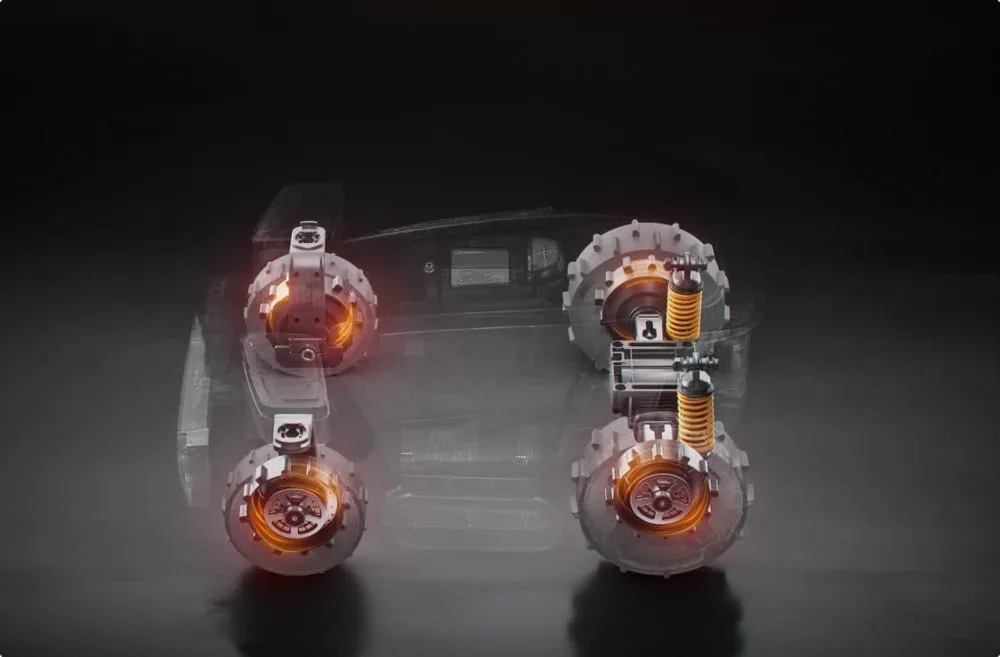
| Drive | Rear-wheel drive | AWD with Active Steering + dynamic suspension | |
| Cutting width / blades | 8.66 in / 3 | 9.45 in / 6 | |
| Cutting height | 1.57–3.15 in, manual dial | 1.57–3.54 in, electric via app | |
| Slope rating | 45% (24°) | 80% (38.7°) — manufacturer claims | |
| Battery | 4.6 Ah | 6 Ah · ~55 min mow / ~65 min charge (manual) | 6 Ah · US manual omits runtime; EU-twin testers measured ~2 hrs mowing, ~75 min charge |
| Weight | 27.1 lb | 46.7 lb | 47.8 lb |
| Water resistance | IPX6 mower (hose-proof, not submersible) | ||
| Warranty | 2 yrs main / 2 yrs battery | 3 yrs main / 2 yrs battery | |
US-manual figures where a US manual exists. Runtime for the Q110H is not published in its US manual — treat any runtime number for it on retailer pages as unverified.
The battery problem, in Roborock's own words
On every US model, the battery is not owner-replaceable. The manuals say, in substance: "We recommend that the battery of the mower should be replaced every two years. Do not replace the battery on your own. Contact our aftersales team or dealer for help." Roborock is a company whose US presence is vacuums and an Amazon storefront — there is no mower dealer network to drive to. When the pack fades, your mower ships somewhere. Budget for that, and count it as the single biggest ownership difference versus rivals with swappable packs.
Setup: two RTK stories, one working mapping method
The RTK models (Q110H, X115H, X130H) tell two stories at once: the box includes a physical RTK reference station — antenna, poles, ground peg, extension cable — while the marketing leads with Network RTK, which needs no antenna at all. Gizmodo's Q110H test found the setup flow forced the antenna install first; only afterward could the reviewer ditch it and switch to Network RTK, which then worked about as well as Segway's Navimow units. Station siting follows the usual rules: level ground, upright, open sky — the antenna's indicator shows green for a strong signal, orange for poor. The LiDAR X120H skips all of this: no station exists, and Roborock says the dock can go wherever is convenient.
Mapping, on every model, means driving the perimeter yourself with the app's virtual joystick, then adding zones, no-go zones, and passages (about 2.3 ft minimum). The advertised AI Auto-Mapping is not a working US feature yet — Roborock's own pages footnote it as beta / upcoming OTA (over-the-air) update, and Notebookcheck couldn't activate it on either of two test properties of the European LiDAR twin. Also flagged for later: the PreciEdge side edge-cutting module (claims 1.2 in from a boundary) is sold separately on every model, and its US availability and price were unverified at research time — don't count it in your purchase math.
What testers report
Set expectations first: US launches ran March–July 2026, so the record is weeks of reviewer testing, not seasons of ownership. We found no substantive US owner threads and could not verify Amazon star ratings — anyone quoting you a RockMow rating average is quoting marketing copy.
The good: the hardware earns real praise. Active Steering pivots the front wheels nearly 90°, giving near-zero-turn maneuvers without the turf-tearing skid-steer trick — the exact problem that dogs tank-turning rivals. The Verge made the Q110H its budget pick, impressed by a flat, treed front yard and camera obstacle detection it rated better than the Segway i-series it resembles. Notebookcheck's Q1 testing found RTK navigation reliable and obstacle detection mostly solid — a hedgehog dummy, hose, and ball avoided. On the LiDAR flagship's European twin, cut quality on open areas was "clean, straight lines, little to criticise," at under 60 dB in test.
The bad:
- Software is the weak half. Notebookcheck's verdict on the LiDAR flagship: "Powerful hardware, software in need of improvement." AI mapping doesn't work yet, route choices can be inexplicable, and boundaries are over-conservative.
- Obstacle detection is inconsistent. The LiDAR model reliably caught the hedgehog dummy but "usually ran straight over a tennis ball and a piece of garden hose." Gizmodo's Q110H bumped a tester's leg once and drove over a foot once.
- Edges are wide. The single central disc leaves about 4.7 in (12 cm) or more unmown at raised borders; even with the (separate, maybe-not-US) PreciEdge, testers saw ~4 in gaps where the mower got skittish around overhanging plants and shadows.
- The Q110H's limits: no AWD — a large tree root stopped it cold (Gizmodo); plasticky wheels struggled on a sharp incline; rear-motor whine louder than Navimow rivals; and heavy battery use (60–70% consumed on roughly 1/20 acre in Gizmodo's test, so the ¼-acre figure assumes recharge cycles).
- Slope reality check: the LiDAR twin climbed just over 70% on a test ramp before a tip-over error — short of the 80% claim, though on par with Dreame/MOVA AWD rivals in the same test.
One positive navigation note: no RTK-dropout crisis surfaced in any hands-on. The RTK + VSLAM fusion held position under trees and near fences in Q110H testing — the complaints are about polish, not signal loss.
Pros
- Active Steering: near-zero turns without skid-steer turf damage
- Choice of positioning: RTK + cameras, or a LiDAR flagship with no antenna at all
- RTK models include the station and support antenna-free Network RTK
- Strong cut quality and straight lines in testing
- Roborock app — same polished app as its vacuums
- 3-year main-unit warranty on X models
- Aggressive Amazon discounting (X115H seen $900 under list)
Cons
- Battery is not owner-replaceable on any model — aftersales/dealer swap, ~2-year replacement recommended
- AI Auto-Mapping is beta/OTA-pending in the US and failed in twin-model testing
- Obstacle detection inconsistent — ran over a tennis ball and hose in testing
- Wide uncut edge (~4.7 in+) without the PreciEdge module — which is extra, with US availability unverified
- X130H "1 acre" claim conflicts with its EU twin's 0.74-acre rating
- Q110H: manual height dial, no AWD, heavy battery appetite
- No long-term owner record; Amazon-only sales channel
Who should buy it: early adopters who value the hardware — especially the steering — and are comfortable that the software will catch up via updates. The X115H at its street price (around $1,400–$1,500) is the sweet spot; the X120H LiDAR suits shaded yards that defeat satellites. The Verge's budget-pick Q110H makes sense for small, flat, open yards.
Who should skip it: anyone who expects to swap their own battery in year three, anyone whose yard is mostly edge (the uncut margin is wide), and anyone who needs a mower with a proven multi-season record today. If the "AI maps itself" pitch is why you're buying, wait — that feature isn't real yet on US models.
Heads up: the link below is an affiliate link — it costs you nothing extra and keeps the site running. Full disclosure.
Check price on the RockMow X115H · Check price on the X120H LiDAR
Prices checked October 2026 (Amazon storefront — Roborock sells US mowers there, not on its own site). Compare with the other vacuum-giant mower, the Dreame A3 AWD, or match a mower to your yard in the yard-type picker.